
Comparing Craft Glues: Which Adhesive for Your Project?
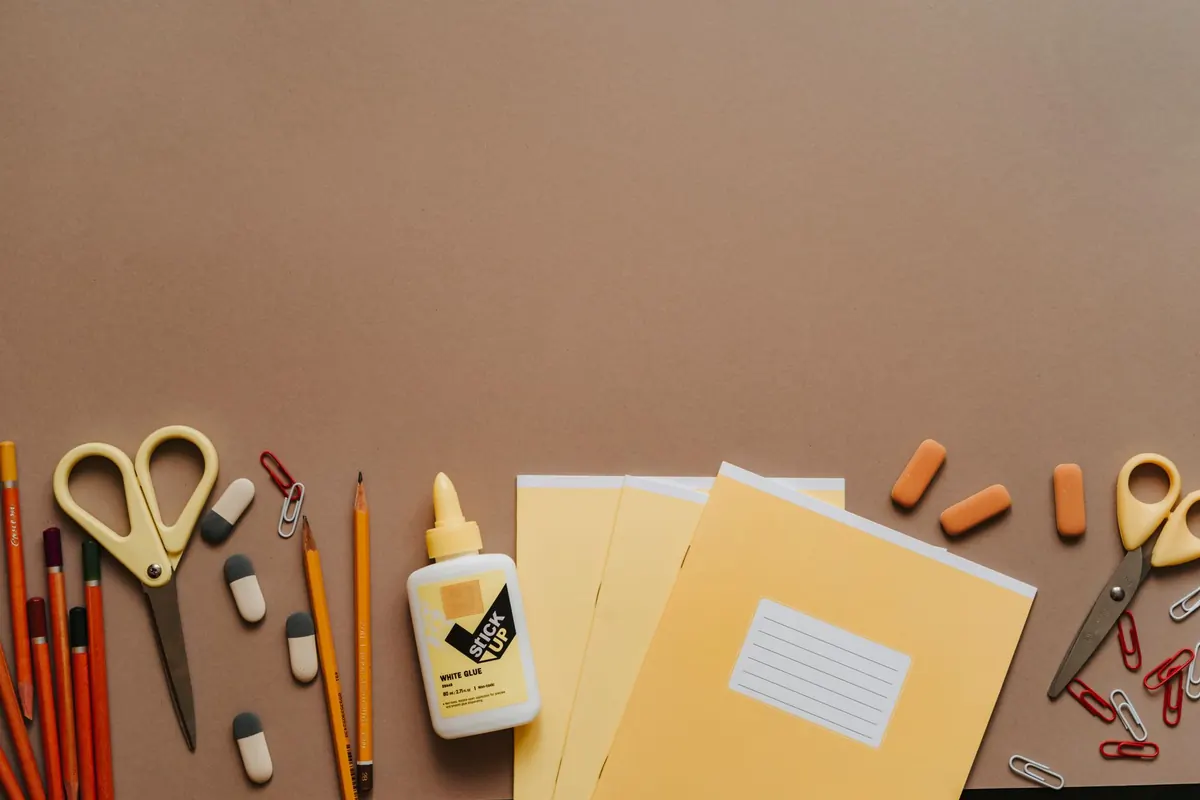
Open any crafter's drawer and you'll find a graveyard of half-used tubes: crusty white glue, a glue gun with a hardened string hanging off the nozzle, epoxy that set solid in its packaging. Most of those failures aren't the glue's fault. They're mismatches. Picking the right adhesive takes about thirty seconds once you know what each type actually does.
Four Questions Before You Squeeze the Tube
Glue works by soaking into the tiny pores and scratches of a surface and locking on, so the rougher the material, the more forgiving the bond. Before you reach for a bottle, answer four questions:
- What are you bonding? Paper, wood, fabric, and foam are porous and accept almost anything. Glass, glazed ceramic, metal, and smooth plastics need a glue made for non-porous surfaces.
- How much load will the joint carry? A photo in a scrapbook and a hook holding a macramé hanger are very different jobs.
- Will it flex? Fabric, leather, and anything that moves need a flexible adhesive. Rigid glues crack at the first bend.
- What conditions will it meet? Water, heat, sunlight, and freezing temperatures each rule certain glues out.
That usually narrows the choice to one or two candidates.
PVA and White Craft Glue: The Everyday Workhorse
Polyvinyl acetate — white glue, school glue, tacky glue, Mod Podge — cures by losing water to the air. That means it needs a porous partner and some patience: most formulas set in 15 to 30 minutes and reach full strength overnight. What it lacks in speed it makes up for in versatility. Paper, cardboard, wood, cork, felt, and fabric all bond well, and it dries clear and slightly flexible, so paper doesn't crack at the seam.
- Thin it with a few drops of water and brush it on for decoupage. It levels out and dries smoother than squeezing straight from the bottle.
- Spread it with an old credit card or a foam brush to avoid wrinkles in paper.
- Weight or clamp the piece. Wet PVA has almost no grab, so it needs pressure for the first hour.
- It is not waterproof. A rinse, a soak, or a damp basement will soften it.
- Yellow wood glue is PVA's tougher cousin — stronger, sandable, and the right call for real wood joints, clamped overnight.
- For scrapbooks and archival work, look for a bottle labeled acid-free.
Hot Glue: Fast, Chunky, and Better Than Its Reputation
Hot glue gets dismissed as the cheap option, but for the right job it's hard to beat. It sets in seconds, fills gaps, and adds a little bulk, which makes it ideal for wreaths, florals, foam crafts, felt, and anything you'd otherwise have to hold in place for ten minutes. It also peels cleanly off glass and metal — either a flaw or a feature, depending on whether you want a temporary hold.
The limits are worth knowing. Hot glue stays rubbery and creeps under steady load, so don't hang anything heavy from it. It softens with heat, which means a wreath on a sunny windowsill or an ornament in a hot attic can sag. Standard guns get hot enough to blister skin; low-temp versions run cooler and suit kids, foam, and delicate ribbon. Tame the strings by touching the nozzle to the surface and moving deliberately instead of dragging away. If you do get a burn, cool it under running water and keep ice off it; for anything worse than a small red mark, get proper medical advice.
Epoxy: When the Joint Has to Survive
Two-part epoxy is the strongest adhesive most home crafters will ever use. Mix resin and hardener, and the chemistry does the rest — no air, no water loss — so it works on glass, metal, ceramic, stone, and most plastics. It fills gaps, dries hard, sands smooth, and shrugs off water and heat better than anything water-based.
The catch is measuring. Epoxy needs the correct ratio of resin to hardener, and eyeballing it is the single most common reason a batch stays tacky for days. Mix in a shallow dish rather than a deep cup, stir for the full time on the package, and scrape the sides and bottom as you go. Work in small batches, because curing epoxy gives off heat and a big cupful can get hot enough to smoke. Gloves and ventilation are sensible, and if your skin is sensitive, cover up.
Choosing a Working Time
Five-minute epoxy suits repairs where the parts fit together cleanly — a mug handle, a cracked knob. Thirty-minute epoxy is for jewelry and anything you need to nudge into position. For clear results on visible work, look for a formula labeled non-yellowing.
Super Glue (Cyanoacrylate): Fast, Strong, and Unforgiving
CA glue cures in seconds by reacting with moisture in the air and on the surface. It's brilliant at what it was designed for: tight-fitting joints between smooth, non-porous materials. It's also brittle, so it fails under impact or sideways force and cracks if the joint flexes. It cannot fill gaps.
Three habits make it easier to live with. Gel formulas don't run down vertical surfaces and buy you a few extra seconds of positioning. An accelerator spray cures it instantly, though it can leave a white haze on some finishes. And keeping the bottle upright, the nozzle wiped, and the storage spot cool slows the cure inside the tube. One caution that matters: CA glue bonds skin in seconds. Keep acetone or nail polish remover nearby, and if glue ever gets in an eye, rinse and seek medical care right away.
The Specialists Worth Owning
A few dedicated adhesives earn their shelf space once you know when to grab them.
- Fabric glue — flexible and washable, for hems, appliqué, and trims where stitching isn't practical. Check the label before you wash the finished piece.
- Spray adhesive — for large flat sheets: mounting photos, backing fabric with foam core, laminating paper. Use it outdoors or with strong ventilation and tape off anything you don't want tacky.
- Contact cement — for laminates, leather, and rubber. Coat both sides, let them dry until just tacky, then align in one motion, because it grabs on contact.
- Glue dots and double-sided tape — no drying time, no mess, and often removable, which makes them perfect for packaging and paper crafts.
- Decoupage medium — a PVA cousin with a built-in matte or gloss finish. Several thin coats always beat one thick one.
Before You Glue: Three Habits
Test on scrap. Every unfamiliar material deserves a two-minute trial. Glue a scrap piece, wait until it's fully cured rather than merely set, then try to pull it apart. You'll learn more from that than from any label.
Clamp and wait. Most joints fail because someone handled them too soon. Water-based glues want overnight, epoxy wants its full cure time, and hot glue is ready immediately. Budget for the wait.
Photo: olia danilevich / Pexels